
15 Scottish Wedding Traditions for Your Dallas Celebration
The Attire: Honor and Heritage
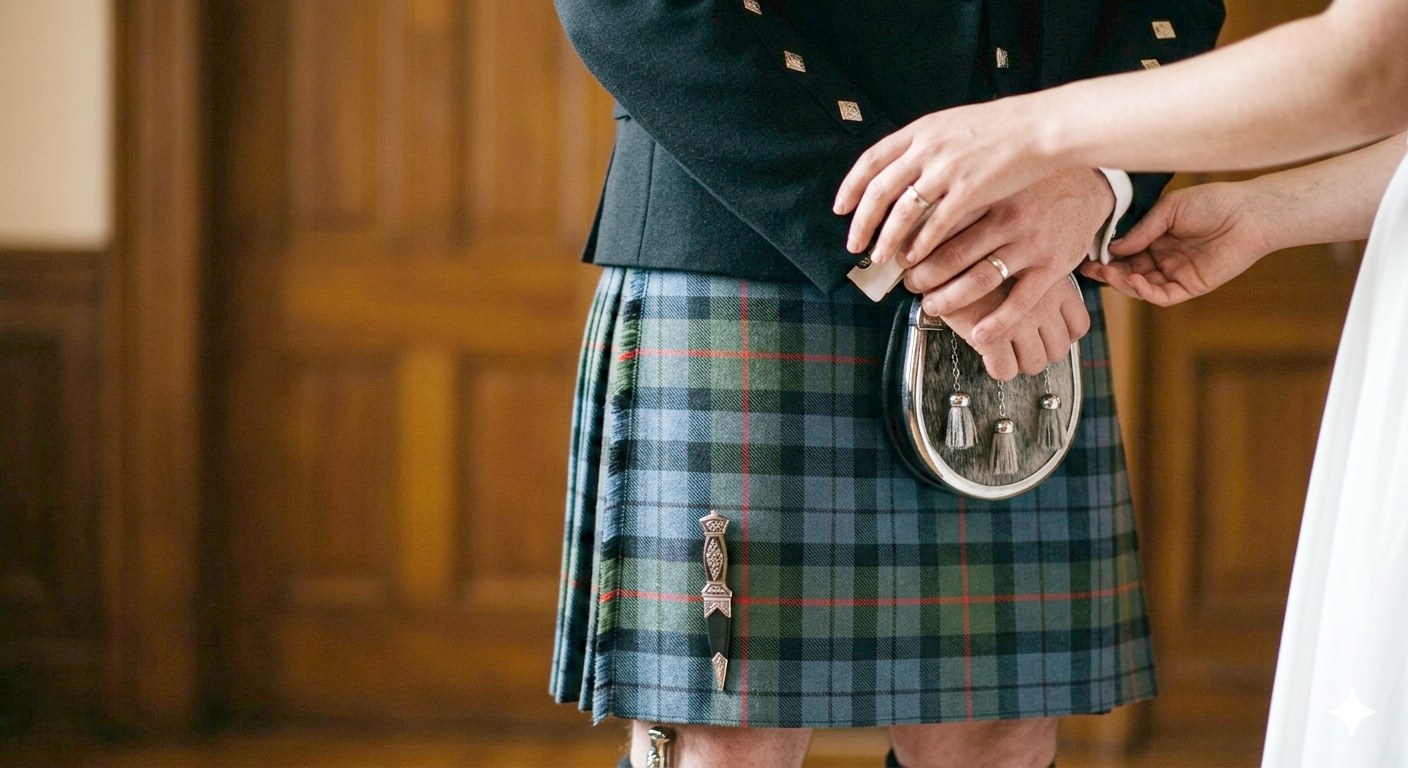
1. The Groom in Full Highland Dress
This is the cornerstone of the Scottish wedding. The groom wears a kilt in his family or clan tartan. If he doesn’t have a clan tartan, a universal tartan (like Black Watch or Scottish National) is perfectly appropriate. For a formal wedding, this is paired with a Prince Charlie jacket, a sporran, kilt hose, and sgian-dubh (a small knife tucked into the hose). All the above items are available at Dallas Kilt Rental for sales & rentals
2. A Sprig of White Heather
Often tucked into the groom’s lapel (on the Prince Charlie jacket) or included in the bride’s bouquet, a sprig of white heather is a traditional token of good luck. It is a rare find in the Scottish Highlands, making it a powerful symbol of fortune and protection for the marriage.
3. The Bride’s Luck: A Sixpence in Her Shoe
An old tradition, shared with other cultures but strictly observed in Scotland. The bride places a silver sixpence (or a dime, in a Texas context) in her left shoe just before walking down the aisle. It is a charm to ensure a life of wealth and prosperity.
The Ceremony: The Pipes and the Vows:
4. The Piper: A Sonic Entrance
The Great Highland Bagpipe is the quintessential sound of a Scottish wedding. A solo piper must escort the wedding party. The music often begins outside the venue as guests arrive, setting the tone. Traditionally, the piper plays as the bride and groom emerge from the ceremony as a newly married couple, leading them in a recessional
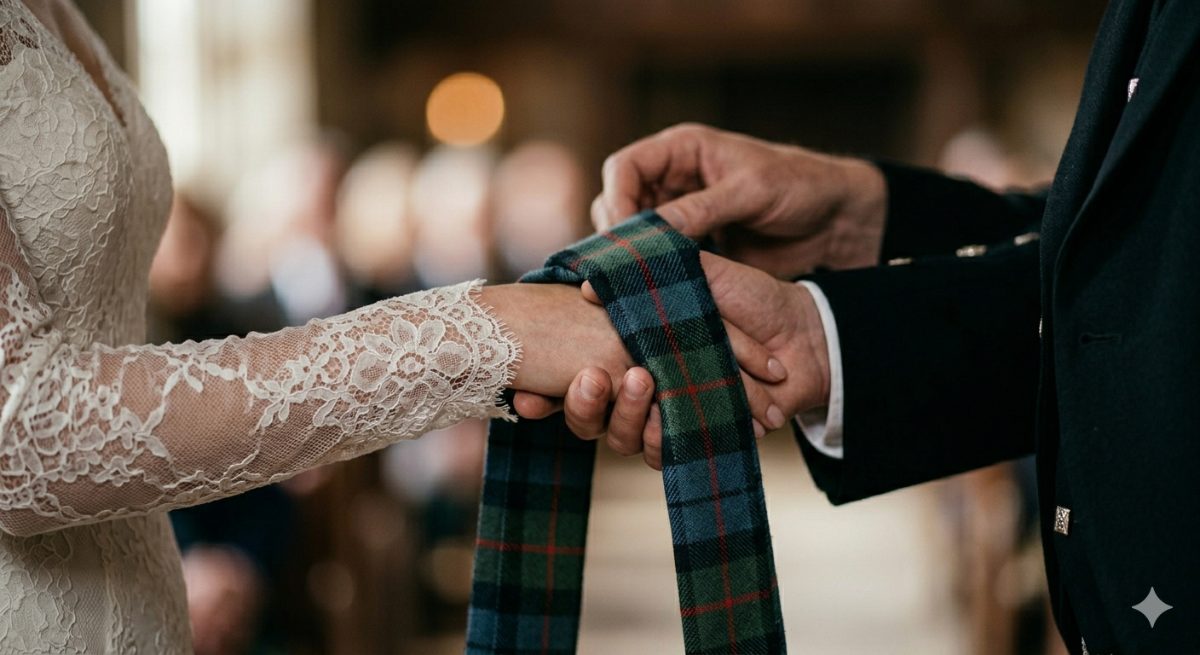
5. The Handfasting
This is the ancient Celtic custom that gave us the phrase “tying the knot.” During the ceremony, the couple’s hands are bound together with a special cord, ribbon, or, increasingly, a strip of the family tartan. This binding symbolizes the commitment and the merging of two lives into one. The bond is meant to remain during the vows.
6. The Oaths in Scots
To add deep authenticity, many couples choose to recite all or part of their vows in the Scots language or even Scottish Gaelic. Speaking the ancient words provides a profound, raw connection to heritage that guests will never forget.
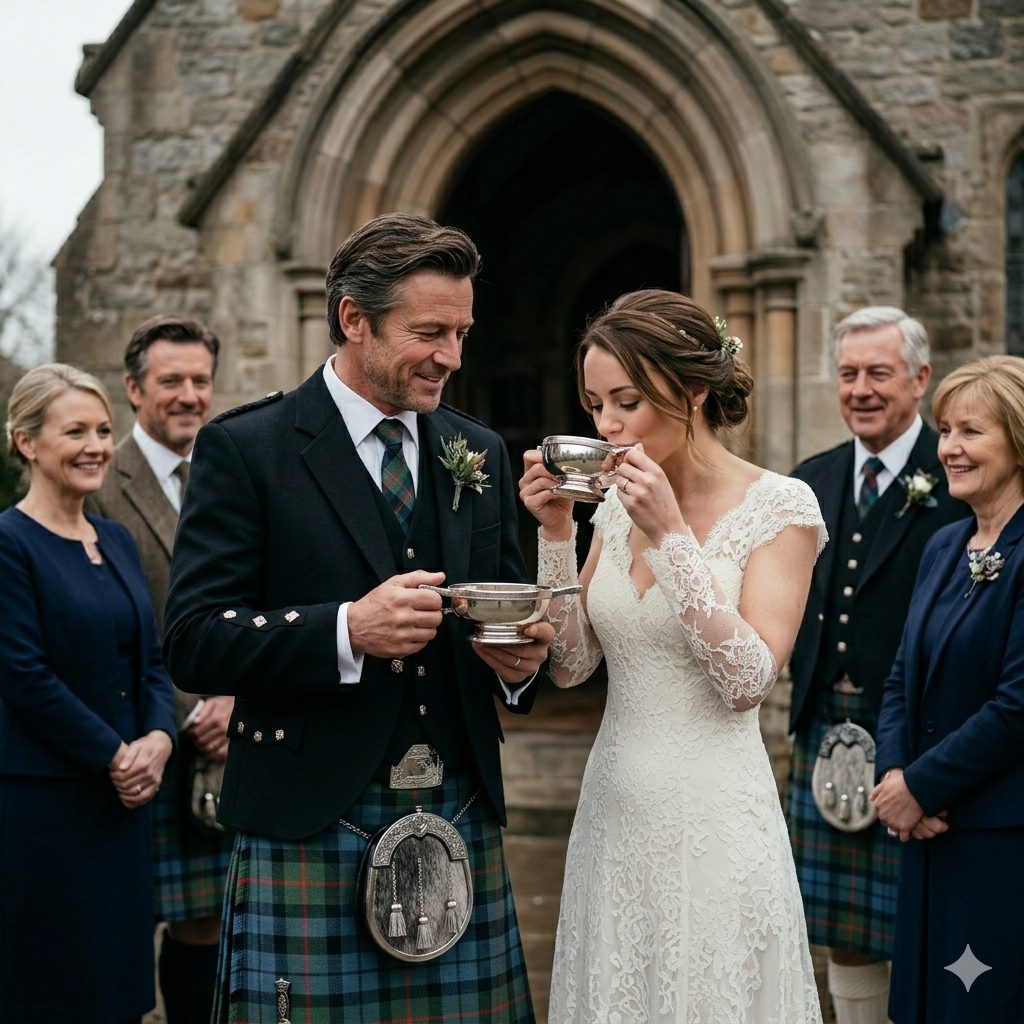
7. The Passing of the Quaich
The Quaich (pronounced “quake”) is a traditional two-handled “loving cup” or “cup of friendship.” Following the vows, the cup is filled with whisky (or sometimes a non-alcoholic substitute) and presented. The bride drinks, then the groom drinks, and then the cup is passed to their families, symbolizing the new bond between the clans. Quaich is available at Dallas Kilt Rental. We can also personalized too.
8. The Scramble
As the bride gets into the car to leave the ceremony (or sometimes as they leave the church), she throws a handful of small coins for local children to collect. This fun, slightly chaotic event is a gesture of goodwill, ensuring the bride brings generosity into her new life.
The Reception: The Celebration of Two Clans
lask9. Presentation of the Tartan Pin or Sash
Upon entering the reception, or immediately after the Quaich ceremony, a high-ranking member of the groom’s family may present the bride with a tailored rosette, sash, or a large silver pin featuring the groom’s family tartan. This formally welcomes the bride and signifies her acceptance into his clan.
500 Different Sash can be purchase from Dallas Kilt Rental.
10. Piping in the Top Table
A spectacular way to begin the wedding breakfast. As the piper (the same one who played at the ceremony) plays a lively march, the bride and groom lead the top table party (parents, best man, bridesmaids) into the reception venue and to their seats. The pipes only stop when the couple is standing at their place.
11. Speeches and a Toast to the Clans
Scottish wedding speeches are known for being humorous and heartfelt. The Best Man’s speech often includes a specific toast, To the Clans! honoring the heritage and the coming together of the families. Whisky is the required spirit for this toast. Personalized Dram Glass and flask available at Dallas Kilt Rental.
12. The Traditional Grand March
This is often the first dance, or it immediately follows it. The Piper begins a march, and the bride and groom lead the wedding party and then all the guests in a choreographed procession through the reception hall. It is a striking sight, showcasing every kilt and gown, and it gets everyone involve
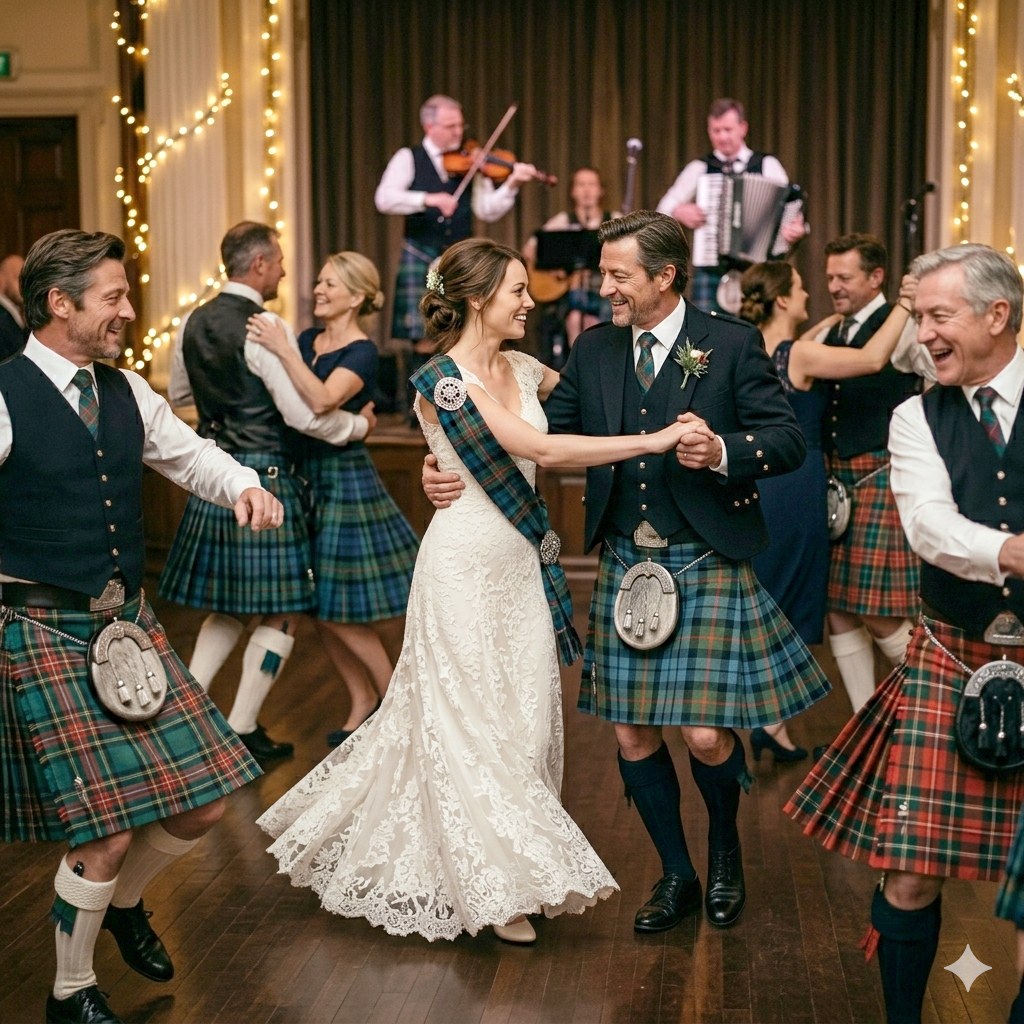
13. The Ceilidh
No Scottish wedding is complete without a Ceilidh (pronounced “kay-lee”), a traditional dance party. A live band plays high-energy folk music while a “caller” instructs the guests on the steps for traditional dances like the “Gay Gordons,” “Strip the Willow,” or the “Dashing White Sergeant.” This is where kilt-wearers must be ready to mov
14. A Ould Lang Syne Circle
As the reception concludes, guests form a massive circle, linking arms to sing Robert Burns’ “Auld Lang Syne.” The bride and groom stand in the center of this circle. As the song ends, the circle rushes inward to embrace the couple, a powerful visualization of the love and community surrounding the new marriage
The Morning After: The First Foot
15. First Footing
This tradition extends into the first day of the marriage. The “First Foot” is the first person to cross the threshold of the couple’s new home (or their hotel suite) after the wedding. For good luck, this person should be a tall, dark-haired male (often the groom himself or a close friend in a kilt). He traditionally brings simple symbolic gifts like coal (for warmth), shortbread (for food), and whisky (for cheer), ensuring prosperity for the household.